Florida Cop Charged With Attempted Manslaughter in Shooting of Autistic Man’s Unarmed Therapist

blog #5 entry

https://www.nbcnews.com/news/us-news/florida-cop-charged-manslaughter-shooting-autistic-man-s-unarmed-therapist-n745716

A couple months ago I came across the podcast Aftereffect which tells the story about Arnaldo Rios Soto. Just to catch the readers up to date, Arnaldo is an 20 year old man with autism who lives in a residential group home. He left his residence with his care taker Charles and Arnaldo decided to sit down in the street and refused to move. He sat there playing with his silver toy train while Charles tried to keep him safe from the cars and pedestrians. Until one woman saw the situation and called the police informing them that a man might have had a gum in the street. Fast forward to Charles laying on the ground with his hands up and later getting shot. Arnaldo did not threaten the police, he did not charge the police, he was however yelling at Charles. Not because he felt he was in danger, but because he engaged in vocal stereotypes and what he was scripting went with the situation. My thoughts during the first couple episodes, have the police had training when dealing with individuals with autism? Viewing the scene to a layman, did Arnaldo seem threatening? Charles certainly did not, while he laid there with his arms over his head, trying to talk to Arnaldo. How many police head quarters are equipped to handle these situations? Are they trained on the proper restraint procedures if someone should aggress and become aggressive. Should all individuals who have a history or elopement be required to wear tracking devices? There are many situations where police are called to handle family “disturbances” individuals who elope and those who engage in aggressive behaviors and its unfortunate many police officer are not trained or equip to handle these situations. 
 

A Struggle to Educate the Severely Disabled

20donovan-span-articleLarge-v2

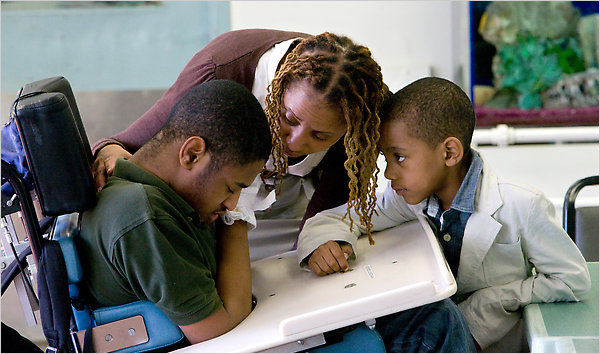
This article discussed an opposing view to “I Can Identify Saturn but I Can’t Brush My Teeth: What Happens When the Curricular Focus for Students with Severe Disabilities Shifts”. Donovan is a 20 year old young man with a severe traumatic brain injury from 6months old. He does not walk, has no verbal skills, he can recognize familiar voices, yet he cannot feed himself. He has had difficulty mastering infant leveled tasks ie: opening and closing his eyes on command. While his mother like his teachers, she wishes that would focus on his self injurious behavior and self stimulatory behavior.  She feels he needs more than 30 minutes of PT twice a week, more speech and more OT. She feels more functional skills should be the focus, not money. Rebecca Bravo, the principal, believes in integrating the state mandated curriculum into Donovan’s day and having an 1:1 aide assist him throughout the day helping him switch classes every 50 minutes will keep him stimulated and engaged. She is striving for students with severe disabilities to add a twist into their education by modifying state standards for the students. Donovan might not know to call 911 in an emergency but he might be able to recognize the sound of the fire truck when it drives by. Incorporating the life skills into the state academic is a wonderful way to help educate students with severe disabilities. Some educators struggle with the academic focused classroom when teaching students with disabilities. My opinion on this is somewhere in the middle based on the students severity. I believe that teaching functional skills is imperative, but if teaching certain areas of academic subjects will enlighten students and keep them stimulated than i believe that it should be done. I feel parents should also have a large say as to what they feel the student should learn when dealing with severe disabilities.

The Journey Begins Here…

Teaching-classroom-624x444
Classroom Social Dynamics Management: Why the Invisible Hand of the Teacher Matters for Special Education Thomas W. Farmer, PhD, Molly Dawes, PhD, Jill V. Hamm, PhD, David Lee, PhD, Meera Mehtaji, MEd, Abigail S. Hoffman, PhD, Debbie S. Brooks, PhD

I agree with this article, teachers are overlooked on students peer relations and development of social interactions. In most classrooms, functional/social skills are not a stressed skill to be taught. It is assumed by parents that these skills come naturally for students. In some cases it does, however in some special education classrooms this can be a huge deficit for some. In relation to the invisible hand, teachers should facilitate a more center-based curriculum, which will help students develop stringer peer relations. If as teachers we become more aware of student’s deficits, we can help the student’s blooms their strengths. 

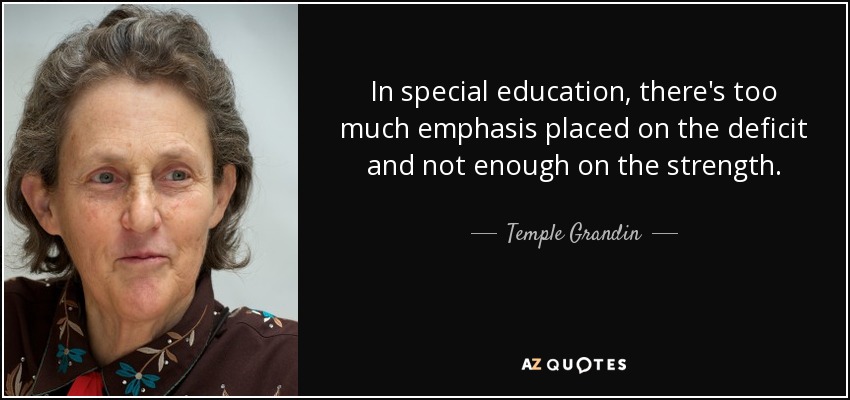
quote-in-special-education-there-s-too-much-emphasis-placed-on-the-deficit-and-not-enough-temple-grandin-86-76-00Thanks for joining me!

Hi! I am Cynthia and I am a special education teacher in New Jersey. I have been in the field of ABA for 8 years and teaching for about 4 years. Today I chose this quote from Temple Grandin because as educators we are always trying to fix the deficits, fix the problems. Thats great because our students need it, however I feel as educators we need to focus more on the students strengths. Help students find what they are great at and teach them to blossom. I can agree with Temple Grandin, as an ABA teacher, I focus on what my students need to improve on, this year I have made it my personal goal to help each one of my students find something amazing. In my blog I will post different articles, quotes and pictures of students and teachers finding their strengths and greatnesses!!

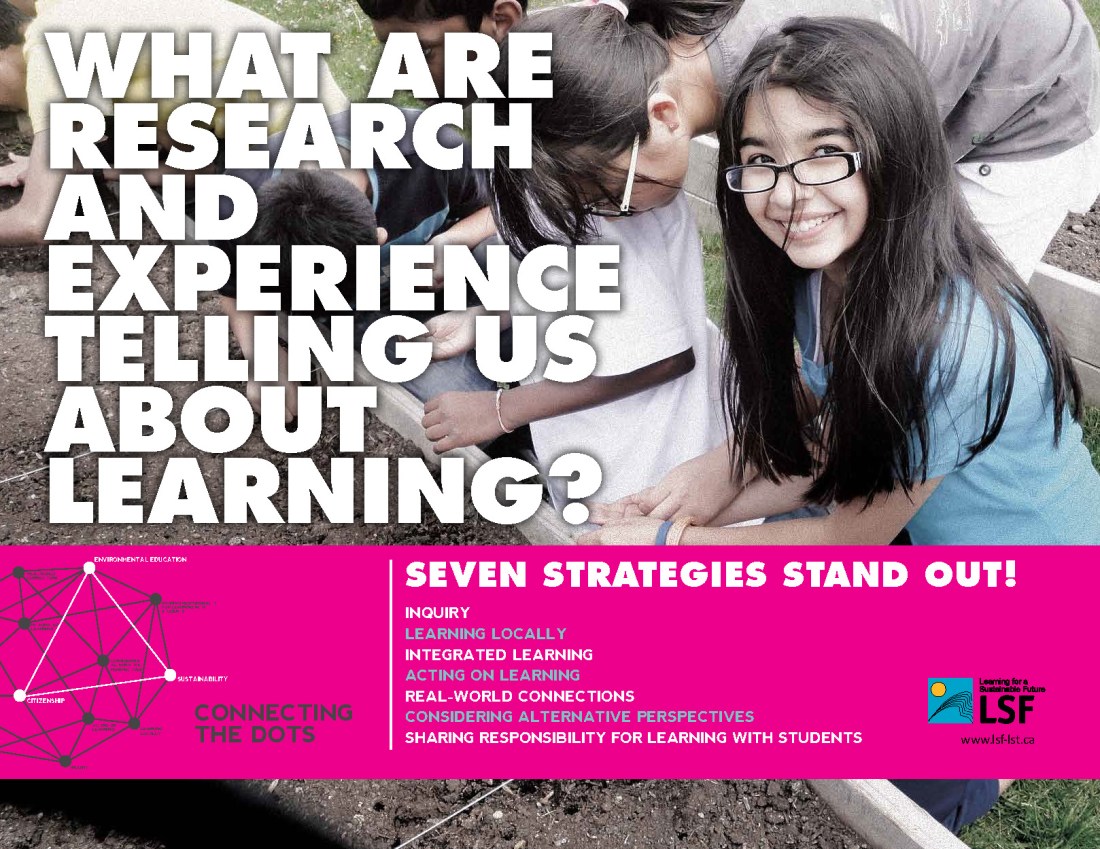
DotsFlyer_Page_1 Continue reading “The Journey Begins Here…”